

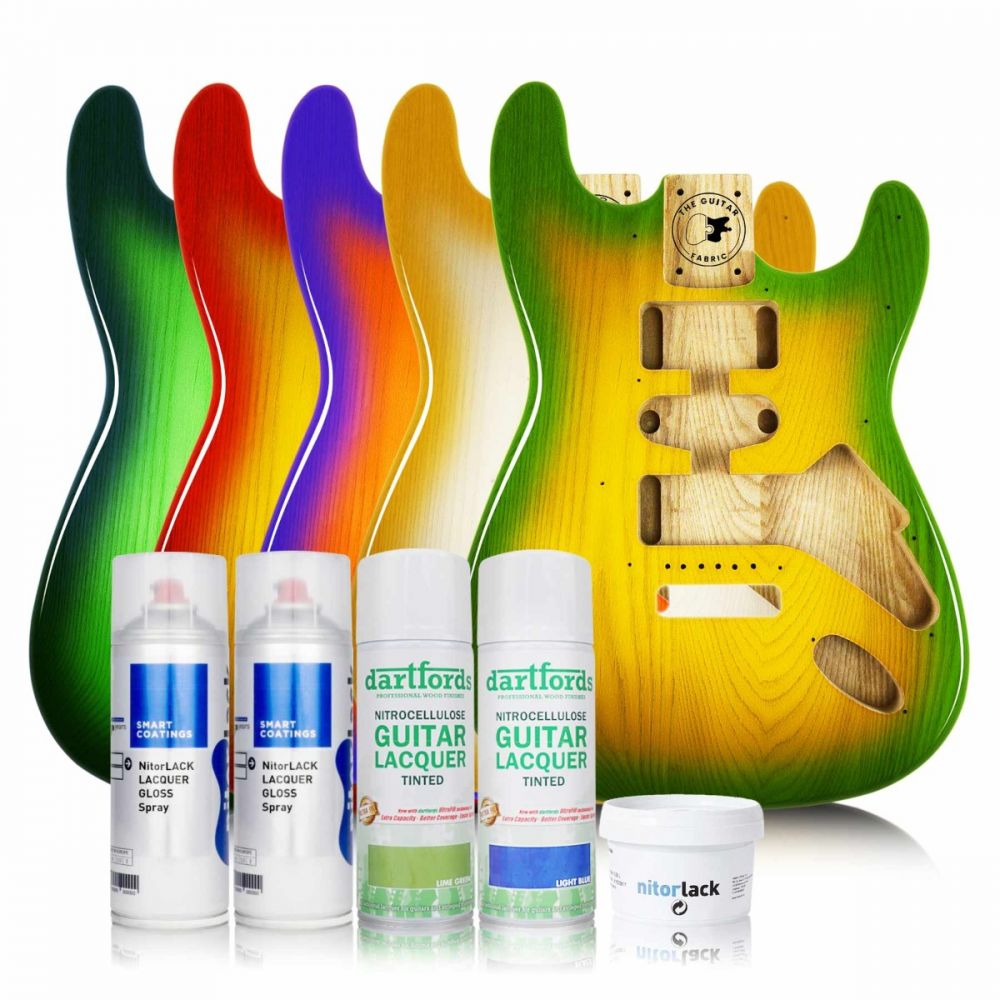
Read our Nitro Spray Sunburst Guide and Translucent Nitro Spray Guide.
Not sure what you need? Answer a few questions about your guitar and we pre-fill this set for you.
Take the 2-minute quiz…
BUILD YOUR OWN TINTED NITRO LACQUER KIT: THE COLOUR IS IN THE SPRAY.
TRANSLUCENT, 2 COLOURS, SUNBURST OR VINTAGE AMBER: THE GRAIN STAYS VISIBLE, NO DYE TO MIX.
Choose your effect, then the products: a grain filler (mahogany, natural or black), an optional clear nitro sealer, your tinted lacquer sprays (Amber, Butterscotch, Vintage Matt, Red, Blue, Black…) and the clear nitro top coat in gloss, satin or matt. Tinted lacquer is sprayed in light coats: the more coats, the deeper the colour, which makes bursts and fades easy. Everything bought together gets 12% off.
One tinted can covers a body; take two for a body and a neck. Not sure what you need? Take our 2-minute quiz at the top of the page and we pre-fill the set for you.
Prefer to colour the wood with dye? See our translucent nitro set with dye, browse all nitro paint sprays or our other guitar finishing kits.
Flammable products: shipped to the UK and most of the EU.
HOW TO COLOUR YOUR GUITAR WITH TINTED NITRO LACQUER
- Prep & sanding: sand the body and neck progressively to a fine grit (optional sanding set).
- Grain filler (optional): mahogany, natural or black: smooths open-pore woods and can make the grain stand out.
- Clear sealer (optional): seals the wood for an even colour, especially on soft or blotchy woods.
- Tinted lacquer: spray light coats until you reach the shade you want. For a sunburst, spray the light colour all over, then the darker one around the edges.
- Clear top coat: protect the colour with clear nitro in gloss, satin or matt (2 cans for a body).
- Polishing (optional): once fully cured, polish a gloss finish for maximum depth.
COVERAGE & NOTES
1 tinted can covers a body, 2 cans a body and a neck. Nitrocellulose lacquer is solvent-based and flammable: spray in a well-ventilated area, wear a respirator and gloves, and keep away from heat. Always try your colour on scrap wood or inside a cavity first.


